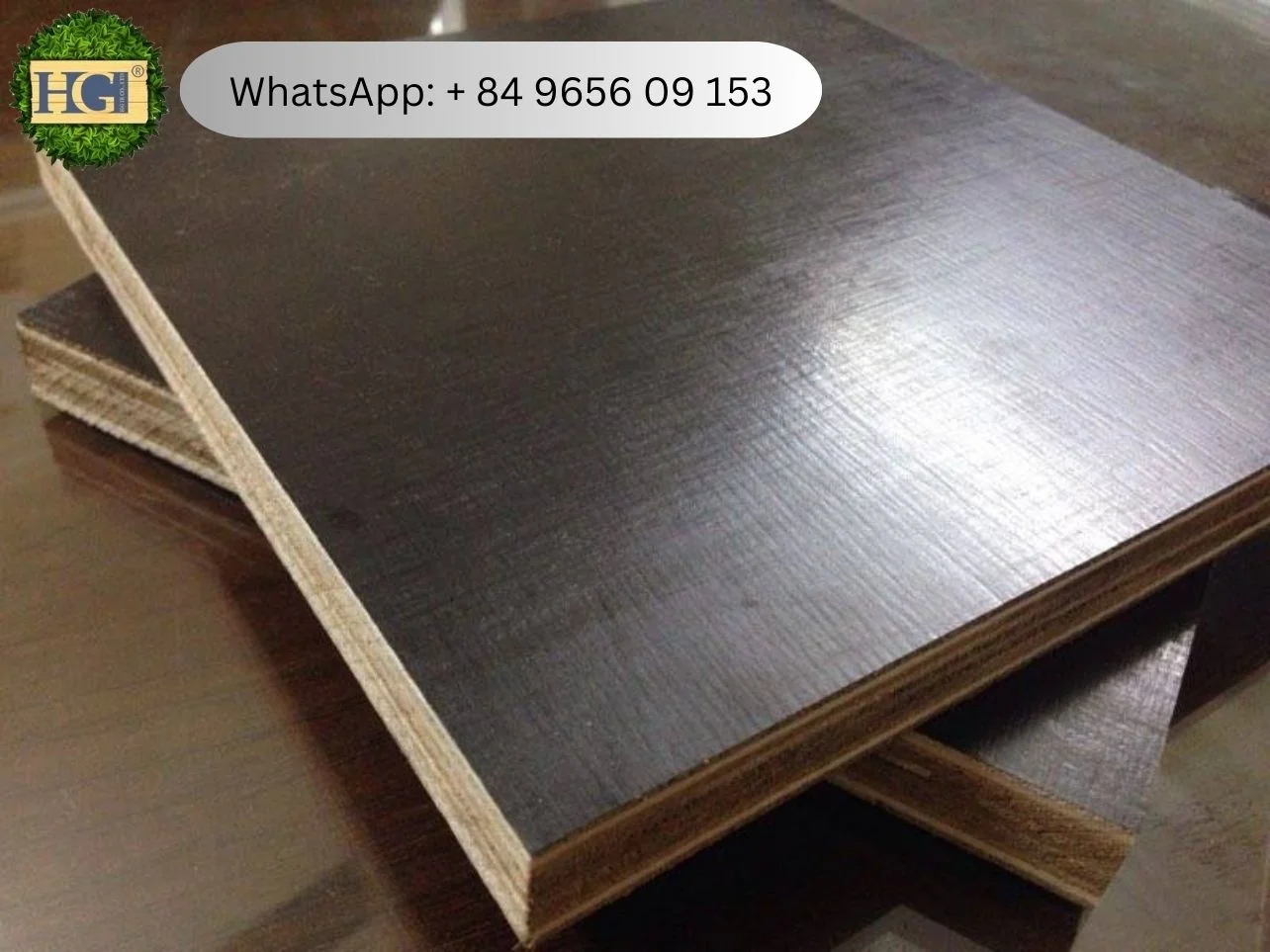
Here are the specifications of the packing plywood from HG Plywood factory:
| Size: |
1220*2440 mm (4*8 ft) |
| Thickness: |
10mm, 12mm, 15mm, 18mm |
| Thickness tolerances: |
± 0.5mm |
| Grade: |
A/A |
| Face/Back: |
Film: Stora enso, brown |
| Core: |
Mixhardwood (rubber, acacia, eucalyptus) |
| Glue: |
100% WBP (Water Boiled Proof) – Phenolic |
| Humidity: |
12-15% |
| Moisture absorption: |
9.7%. |
| Density: |
≥ 650kg/m3 |
| Hot press: |
Two time |
| Cold press: |
One time |
| Reuse: |
8 - 10 times |
| Screw holding force: |
148.0 N/mm2. |
| Swelling of the thickness soaked in water for 24 hours: |
2.1%. |
| The force of pressing the board: |
about 100 – 120 tons/m2. |
| Country of origin: |
Vietnam |
| Min.Order Quantity: |
1*40HC container |
| Packing standard: |
20ft Container : 21m³ (16 pallets)/40ft Container: 49 m³ (18 pallets) |
| Payment terms: |
T/T or L/C |
| Port of loading: |
Haiphong – Vietnam |
| Delivery Detail: |
We always strive to deliver as quickly as possible, however, the specific delivery time may vary depending on the exact location of the customer |
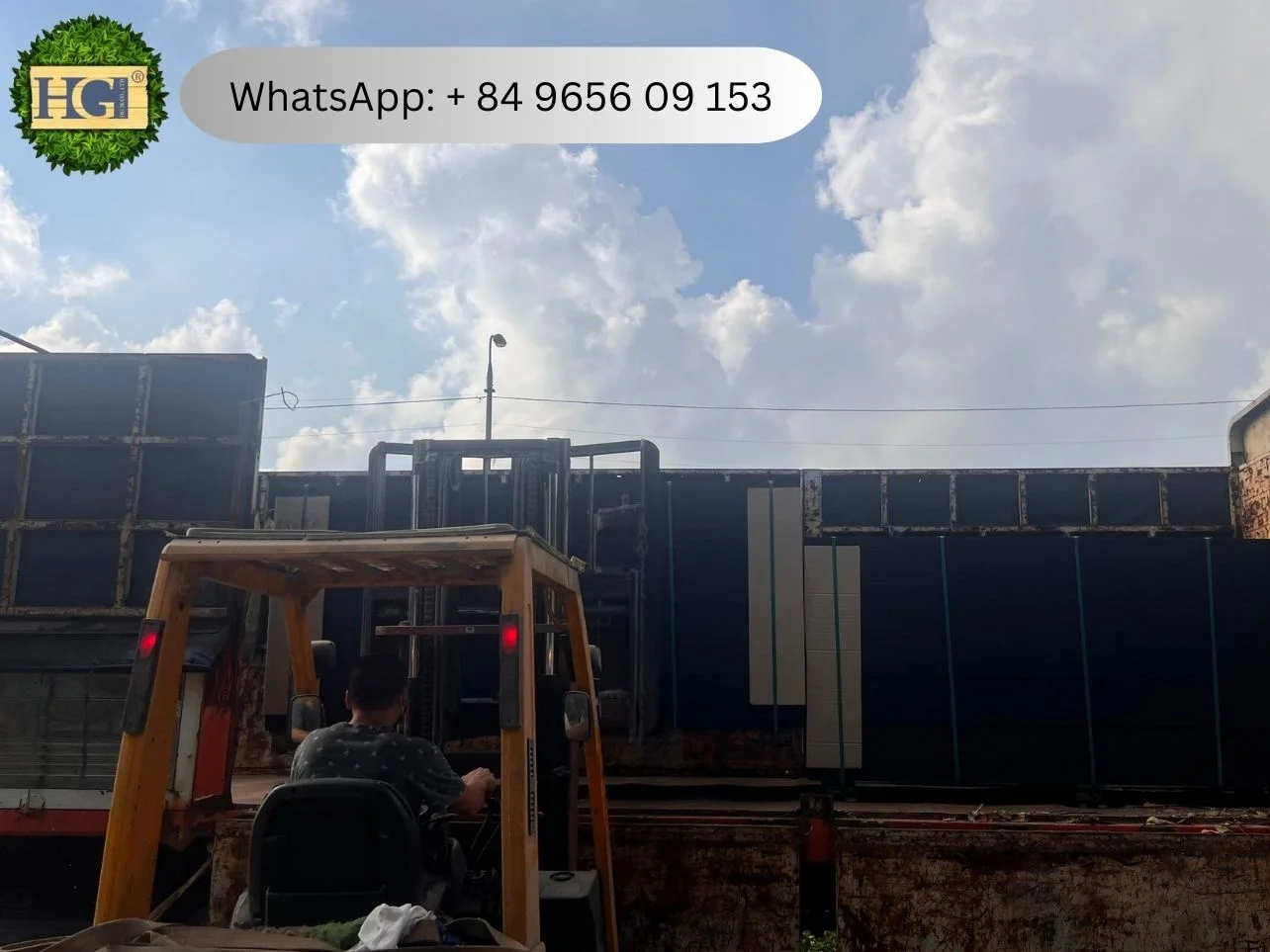
Below are some images of film-faced plywood from HG Plywood. If possible, we invite you to visit our factory directly for a better assessment and experience.
The film faced plywood production process has 3 main stages, which are:
Stage 1: Wood harvesting
Selecting appropriate trees (conifers or broadleaf). After cutting off the branches and leaves with a cutter, the wooden logs are collected and delivered to the processing facility.
Stage 2: Wood treatment
The wooden body is immersed in water for a specific period of time. This helps balance moisture and soften the wood grain, making it easier for the peeling machine to cut it into various accurate sizes.
Stage 3: Plywood production
Step 1: Peel and cut the wood log into pieces according to the specific required size.
Step 2: Create thin wooden veneers using the rotary peeling machine.
Step 3: Trim edges and classify the thin wood veneers according to standard specifications.
Step 4: Place the veneers into the dryer to reach the ideal standard moisture content.
Step 5: Apply optical scanning technology to identify and remove any defects on the veneer panels.
Step 6: After surface cleaning and double-sided glue rolling, stack the boards on top of one another (cross-graining) to achieve the required thickness.
Step 7: The board is cold-pressed to flatten the core and ensure the glue is evenly distributed.
Step 8: Heat and press the board under extreme heat and standard pressure to tightly bond the thin wood panels into a solid block.
Step 9: After hot pressing and cooling, the plywood goes through the trimming and sanding machine to remove edges and smooth both surfaces.
Step 10: Phenolic film coating
Following edge cutting and sanding, the wooden boards are hot-pressed with premium water-resistant Phenolic film.
Step 11: Edge sealing and painting
To prevent water from penetrating through the edges, all four edges of the board are painted with specialized waterproof edge-sealing paint.
Step 12: Quality inspection & packaging
After completion, the QC team evaluates the finished products. Standard plywood is packed with straps according to export specifications and ready for shipment.
We don't just talk about quality; we prove it. HG Plywood's 100% WBP Phenolic film faced plywood easily passes rigorous boiling tests (72 hours boiling in water) without delamination. This ensures maximum moisture resistance and durability for multiple reuses in extreme construction environments.