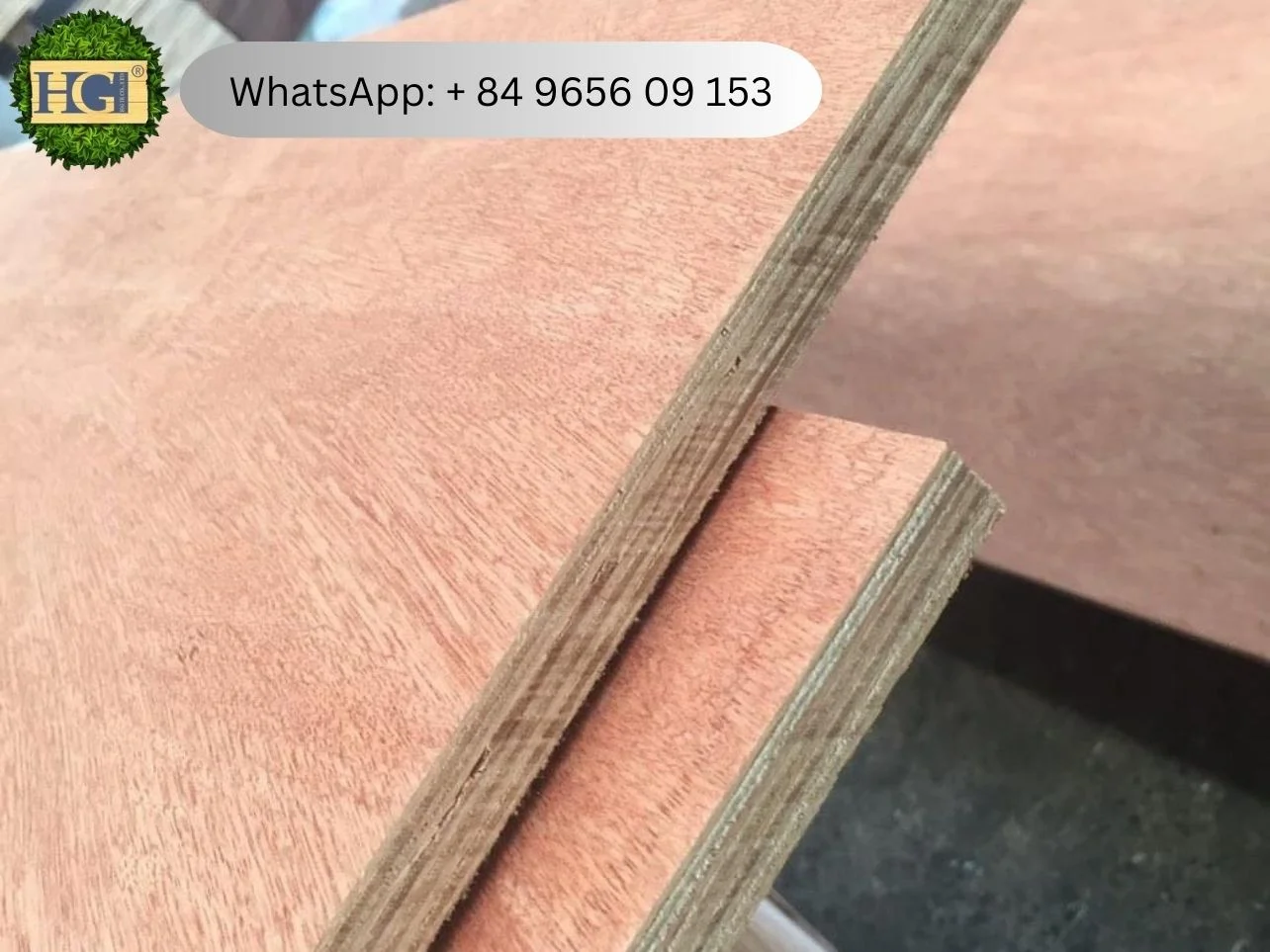
Berikut adalah spesifikasi papan lapis komersial daripada kilang HG Plywood:
| Saiz: |
1220x2440 mm (4x8 ft), 914x1828mm (3x6 ft) |
| Ketebalan: |
2mm hingga 25mm |
| Toleransi Ketebalan: |
± 0.5mm |
| Gred: |
A/A, A/B |
| Permukaan/Belakang: |
Okume, Bintagor |
| Bahan Teras: |
Kayu keras campuran (getah, akasia, eukaliptus) |
| Perekat: |
MR, E2 |
| Kandungan Lembapan: |
12-18% |
| Ketumpatan: |
≥ 650kg/m3 |
| Tekanan Panas: |
Dua kali |
| Tekanan Sejuk: |
Satu kali |
| Kegunaan: |
Untuk membungkus pelbagai produk, termasuk palet, sangkar, kusyen tempat duduk, loteng, rak, dll., tetapi ia terutamanya popular untuk membungkus barang berharga, buah segar, dan barangan rapuh |
| Piawaian: |
Eksport HG Komersial |
| Negara Asal: |
Vietnam |
| Kuantiti Minimum Pesanan: |
1 kontena 40HC |
| Piawaian Pembungkusan: |
Kontena 20ft: 21m³ (16 palet) / Kontena 40ft: 49m³ (18 palet) |
| Syarat Pembayaran: |
T/T atau L/C |
| Pelabuhan Pemuatan: |
Pelabuhan Haiphong – Vietnam |
| Butiran Penghantaran: |
Kami sentiasa berusaha menghantar secepat mungkin, namun masa penghantaran tepat bergantung kepada lokasi pelanggan. |
Berikut adalah beberapa imej papan lapis komersial dari HG Plywood. Jika boleh, kami menjemput anda melawat kilang kami secara langsung untuk penilaian dan pengalaman yang lebih baik.
Proses pengeluaran papan lapis mempunyai 3 peringkat utama, iaitu:
Peringkat 1: Pemanenan Kayu
Memilih pokok yang sesuai (konifer atau berdaun lebar)
Selepas memotong dahan dan daun, kayu dikumpulkan dan dihantar ke kemudahan pemprosesan.
Peringkat 2: Rawatan Kayu
Selama tempoh tertentu, batang kayu direndam dalam air. Ini memudahkan mesin mengelupas dan memotong kepada pelbagai saiz.
Peringkat 3: Pengeluaran Papan Lapis
Langkah 1: Kelupas dan potong kayu mengikut saiz yang diperlukan.
Langkah 2: Buat lembaran kayu nipis menggunakan mesin pengelupas venir.
Langkah 3: Potong panel kayu nipis mengikut dimensi dan pengelasan yang sesuai.
Langkah 4: Untuk mencapai kandungan lembapan yang dikehendaki, panel kayu nipis dimasukkan ke dalam pengering.
Langkah 5: Imbas panel kayu untuk mengesan kecacatan menggunakan teknologi, kemudian buat pembetulan yang diperlukan.
Langkah 6: Selepas membersihkan dan menutup kedua-dua sisi papan perekat, susun papan-papan bertindih untuk mencapai ketebalan yang dikehendaki.
Langkah 7: Papan ditekan sejuk untuk meratakannya dan memastikan gam diagihkan secara sekata.
Langkah 8: Panaskan dan tekan papan untuk tempoh yang ditetapkan bagi mengikat panel kayu nipis dengan kuat.
Langkah 9: Selepas tekanan panas, papan lapis disejukkan dan dimasukkan ke dalam mesin pemangkasan dan pengilatan untuk meratakan tepi dan melicinkan permukaan.
Langkah 10: Semak kualiti produk siap.